









Stop. Read this first.
USA — Poison Control: 1-800-222-1222 UK — NHS 111 Emergency (severe symptoms): 911 / 999
Call one of those numbers before you do anything else. It is free. It is 24 hours. The people who answer do this all day. There is no reason not to call, and several good reasons to.
Everything else — the explanation, the timeline, what to expect — is below. But the call comes first.
You Are Not the First Person to Do This
My aunt manages type 2 diabetes. Has done for years. Organized woman — keeps a medication log, sets phone reminders, the whole thing. Last spring she called me in a panic because she had injected her weekly Ozempic dose on Tuesday, gotten distracted mid-week, completely forgotten she had already done it, and injected again on Thursday.
Two doses. Two days apart. Ozempic is weekly.
Her first question was whether she was going to be okay. Her second question — asked about thirty seconds later, before I had even answered the first — was whether she was stupid.
No to both. Here is why.
Cases of accidental overdoses of injectable weight loss medications have increased by 1,500% according to poison control centers. Not 50%. Not double. 1,500%. The medication is weekly, the pens look identical week to week, life is busy, and honest mistakes happen to careful people constantly. My aunt has been managing her own medication for years without a single problem. One confused week does not change that.
What it does require is prompt attention. Which is why she called me. Which is why you are reading this.
What Is Actually Happening Right Now
Here is the thing about Ozempic that makes a double dose different from, say, accidentally taking two ibuprofen.
Ozempic has a half-life of approximately one week. It takes one to three days to reach its peak level in your blood after each injection. That means the extra dose is not going to spike suddenly and immediately — it spreads out over days, building gradually rather than hitting all at once.
My aunt’s pharmacist, who she called before she called me, explained it this way: “You’re not going to feel fine and then suddenly feel terrible in an hour. If symptoms come, they’ll build slowly and they’ll last longer than you expect.”
That is accurate. A 2024 review in the Journal of Medical Toxicology looked at over 5,700 GLP-1 exposures reported to US poison centers. Nearly 80% were accidental errors. Only 6.2% had serious outcomes.
For most people, a double dose means several days of feeling worse than usual. Manageable. Unpleasant. Not — for most people — dangerous.
For most people. Which is not all people. Which is why the phone call still matters.
What You Might Feel — And When
My aunt felt fine Thursday evening. Friday morning she woke up nauseated. Not dramatically sick — just the background nausea she sometimes gets after her regular dose, but stronger and with less appetite than usual.
That pattern is typical. The most commonly reported symptoms are nausea, vomiting, abdominal pain, and diarrhea — the same side effects that show up during dose increases, just more intense and lasting three to seven days rather than one or two.
If you also take insulin or a sulphonylurea alongside Ozempic, the picture changes. Ozempic on its own rarely causes hypoglycemia — its glucose-lowering effect is tied to blood sugar levels, so it does not drop them the same way insulin can. But combined with those medications, a double dose raises the risk. Symptoms of hypoglycemia include trembling, sweating, confusion, palpitations, and in severe cases, loss of consciousness. If this applies to you, check your blood sugar every two to four hours for at least the first day.
My aunt does not take insulin, which made her situation simpler. If yours is more complicated, that is exactly the kind of detail to give Poison Control when you call.
When to Stop Managing at Home
Most cases of accidental double dosing are managed at home without a hospital visit. Some are not.
Call Poison Control — 1-800-222-1222 in the USA, NHS 111 in the UK — if you doubled from a 1mg or 2mg dose, if you used compounded semaglutide rather than a branded pen, or if you feel significantly unwell. Compounded semaglutide carries considerably higher risk because vial and syringe confusion has caused ten-fold and twenty-fold dosing errors — the uncertainty about what you actually injected changes everything.
Call emergency services — 911 or 999 — for severe abdominal pain, persistent vomiting you cannot keep fluids down through, signs of severe hypoglycemia, seizures, or loss of consciousness. These are not “wait and see” symptoms.
My aunt called her pharmacist, described what happened, and was told she could manage at home given her dose level and the fact that she does not take insulin. She was also told to call back immediately if the nausea got severe or if she felt dizzy or confused. That is the model — check in first, then manage at home with a clear escalation plan.
What Actually Helps at Home
My aunt spent Friday eating almost nothing, drinking water constantly, and lying very still on the sofa watching television. By Saturday she felt well enough to eat toast. By Sunday she was mostly back to normal, though not entirely.
What helped, based on her experience and what the clinical guidance says:
Small meals. Bland food — crackers, toast, plain rice, broth. Not rich food, not fried food, not anything that gives the stomach extra work during a period when it is already unhappy.
Staying upright after eating. Lying flat when nauseated makes it worse. She learned this the hard way on Friday evening.
Steady hydration. Not large amounts at once — small, regular sips. Nausea and vomiting can dehydrate you faster than you expect, and dehydration makes everything worse.
Do not try to induce vomiting. The medication has already been absorbed — it will not help and may make the nausea worse.
Your Next Dose
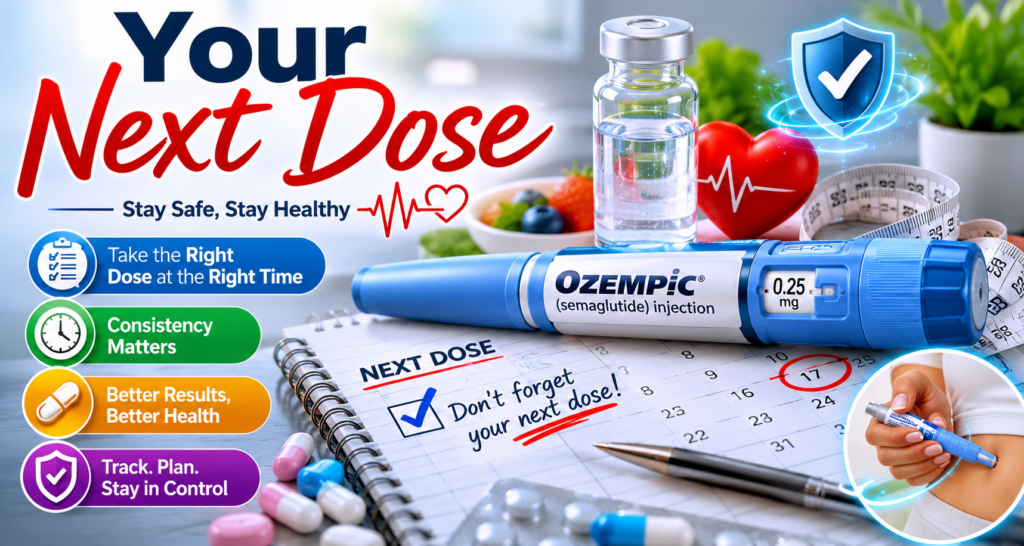
My aunt’s pharmacist told her to skip the following Tuesday dose entirely. The medication was already building in her system from the double dose — adding another injection on the regular schedule would mean three doses in two weeks, which would extend everything unpleasantly.
The standard guidance aligns with that. Skip the next scheduled dose. Resume normal schedule the week after. Do not resume dosing on top of a double dose without checking with your prescriber first.
This is not the place to guess. A message or call to your doctor or pharmacist about specifically your situation, your dose, and your other medications takes a few minutes and removes all the uncertainty.
How My Aunt Stopped It Happening Again
After this, she changed one thing. Just one.
Every time she injects, she writes the date directly on the pen in marker. Not a reminder. Not an app. The date, on the pen, visible every time she opens the fridge where she keeps it.
Two months later, no repeat. The fix was not complicated — it just had to be physical and visible, not digital and forgettable.
Other options that work: a weekly injection log on paper kept near the medication. A phone reminder that says not just “Ozempic day” but “did you already do this week?” — the question prompt makes you actually check rather than just dismiss the reminder. A simple calendar mark on the same day each week.
If you miss a dose, you have five days to take it late. Beyond five days, skip it and wait for your next scheduled date. That boundary — five days — is worth knowing clearly so you never feel like you have to “make up” a missed dose and end up doubling.
The Part Worth Remembering
My aunt was fine. Uncomfortable for a few days, a little embarrassed, and now considerably more careful about her injection routine.
She was also one of the 80-something percent of cases where an accidental double dose causes manageable symptoms that resolve on their own. Not everyone is. The variables that matter — your dose level, your other medications, whether you used compounded semaglutide — change the risk level enough that making the phone call is always the right first step, even when you end up being told everything is fine.
Make the call. Let Poison Control or your pharmacist tell you it is manageable. That conversation takes two minutes and removes the uncertainty that is, right now, probably the most uncomfortable part of all of this.USA — Poison Control: 1-800-222-1222UK — NHS 111Emergency (severe symptoms): 911 / 99

Mikhaila Olena is a lifestyle writer and content creator behind Living Smart Daily, dedicated to sharing practical ideas, thoughtful insights, and everyday inspiration. With a passion for simple living and meaningful choices, she crafts content that helps readers create a more balanced, organized, and fulfilling life.
One comment on “Accidentally Took 2 Doses of Ozempic: What to Do Right Now”