









My dog got into the pantry last spring.
Not a small incursion — a full commitment. By the time I found him, he had managed to knock a jar of honey off the shelf, somehow get the lid off (I still do not fully understand how), and eat what I can only describe as an enthusiastic amount before I intervened. Not half the jar. More than I would have liked.
My first call was to the vet. My second call was to my mother, who told me honey was fine and also that I should get a better pantry latch, which was not wrong. My vet’s answer was more nuanced — and it is the nuance that turns out to be the whole story here.
The Short Answer
Yes, honey is generally safe for healthy adult dogs. In small amounts.
That last part is doing a lot of work in that sentence. Honey is a natural sweetener that does offer some health benefits to dogs, but you do not want to give them too much. The benefits are real. The risks are also real. And the line between the two is mostly about quantity and which dog you are talking about.
My dog — a healthy five-year-old Labrador mix with no existing health conditions — was fine. Gassy for about a day, not particularly bothered otherwise. The vet said the amount he ate was unlikely to cause lasting problems, but confirmed this was not a situation to repeat. Which is exactly the right framing.
Why Honey Is Not Completely Off the Table
Here is what surprised me when I looked into this more carefully. Honey is not just sugar. It contains small amounts of vitamins, minerals, and antioxidants. Veterinarians sometimes recommend honey for certain mild health concerns like kennel cough or seasonal allergies.
A tiny bit can soothe a scratchy throat and can quiet a light cough for a short time. Honey also gives a quick energy boost when a very active dog needs it after play. The antioxidants in honey are small but real.
The operative word there is small. We are talking about trace amounts of useful things — not enough to form the basis of any kind of treatment, but enough to make honey a reasonable occasional treat rather than something to avoid entirely. My vet’s framing was: think of it as a condiment, not a supplement. A little bit occasionally is fine. A lot regularly is a problem.
The Kennel Cough Question
I asked my vet about this specifically because I had seen it mentioned online — the idea that honey can soothe a dog’s cough the way it sometimes helps humans with sore throats.
Her answer was careful. It is not clear if honey can help with a dog’s cough the way it does for humans. Always contact your veterinarian if your dog is coughing before trying any at-home remedies. There could be many different conditions causing the cough, and some are more serious than others.
She was not dismissing honey entirely — she acknowledged the anecdotal evidence and said she had seen it help with mild throat irritation. But she was very clear that “my dog is coughing, I will try honey” is not an appropriate substitute for “my dog is coughing, I should find out why.” If your dog has a sore throat, first visit your veterinarian to determine the cause. Along with following their treatment advice, feeding a little honey could help soothe any lingering inflammation.
In that order. Vet first, honey second as a comfort measure if appropriate. Not the other way around.
Who Should Absolutely Not Have Honey
This is where the nuance gets important, and where a blanket “honey is fine” answer falls apart.
Puppies under one year. Raw honey should not be fed to puppies or dogs with compromised immune systems, as it may contain the presence of botulism spores. A puppy’s immune system is not yet developed enough to handle potential contaminants that adult dogs manage without issue. This is the same reason human infants under one year should not eat honey.
Diabetic dogs. Full stop. Dogs with diabetes have difficulty regulating their blood sugar levels, and consuming honey can cause a dangerous spike in blood glucose. Honey and diabetes in dogs is not a “small amounts are okay” situation — it is an avoid entirely situation.
Dogs with compromised immune systems. Same reasoning as puppies. If your dog is on immunosuppressant medication, recovering from surgery, or dealing with a serious illness, raw honey specifically carries risks that are not worth taking.
Dogs allergic to bee stings. Honey should be avoided if your dog is allergic to bees. This one is easy to miss because most people do not think of honey in connection with bee sting allergies. If your dog has ever had a reaction to a bee sting, check with your vet before introducing honey.
How Much Is Actually Safe
My vet gave me a number when I asked. Honey is generally safe for healthy adult dogs in quantities of one quarter to one half teaspoon per 20 pounds of body weight. Once or twice a week at most, not daily.
My Labrador weighs about 65 pounds. That means somewhere around a teaspoon, occasionally, is the reasonable ceiling. The amount he helped himself to in the pantry was considerably more than that — which is why his stomach was unhappy for a day, even though he was otherwise fine.
The size of the dog matters. A small dog eating the same amount that is fine for a large dog is proportionally a much larger dose. In general, less is usually more when it comes to dog treats, especially for smaller breeds.
Raw vs Pasteurized — Does It Matter
I asked my vet this too because I had seen conflicting things online.
Raw honey retains more of the naturally occurring enzymes, antioxidants, and other beneficial compounds that get reduced during the pasteurization process. It might theoretically offer slightly more nutritional value. But it also carries a higher risk of botulism spores, which is exactly the reason puppies and immune compromised dogs should not have it.
Pasteurized honey is generally considered safer, as the pasteurization process kills most bacteria, including Clostridium botulin spores. However, even pasteurized honey should be given in moderation due to its high sugar content.
For healthy adult dogs, either form is acceptable in small amounts. For anyone in a higher-risk category, pasteurized is the safer choice — though ideally the question of whether honey is appropriate at all has been answered by a vet before that choice even comes up.
The Xylitol Warning
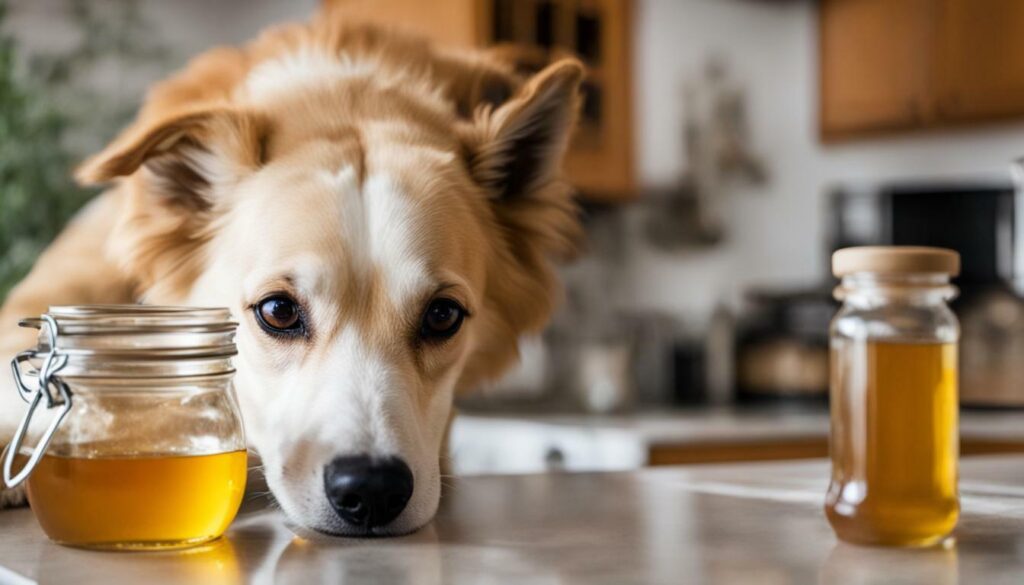
This deserves its own paragraph because it is important enough that glossing over it would be irresponsible.
Honey is generally safe for dogs to eat, as long as it does not contain harmful additives, like xylitol.
Xylitol is an artificial sweetener that appears in some processed honey products and is extremely toxic to dogs — even in small amounts. It causes rapid insulin release and can lead to hypoglycemia (dangerously low blood sugar) and liver failure. If you are feeding your dog honey, it should be pure honey with no additives. Read the label. If xylitol appears anywhere in the ingredient list, that product should never go near your dog.
Plain honey from a reputable source does not contain xylitol. Flavored honey products, honey blends, and some processed honeys might. The two seconds it takes to check the label matters.
The Practical Version
My pantry now has a better latch. My dog, as far as I can tell, has learned nothing from the experience and would absolutely do it again given the opportunity.
What I actually took away from the whole episode: honey is fine for dogs in the way that most treats are fine — useful in small amounts, worth enjoying occasionally, not something to build a health strategy around, and completely off the table for puppies, diabetic dogs, and immune compromised dogs.
Always check with your veterinarian before giving your dog any new foods. What might be okay for one dog might not be good for your dog, depending on multiple factors such as their age, health history, health conditions, and diet. That is the one-sentence version. My vet’s answer, my mother’s answer, and everything I read afterward all arrive at the same place eventually. A small amount, occasionally, for the right dog, is fine. Anything beyond that requires a conversation with someone who knows your specific dog.

Mikhaila Olena is a lifestyle writer and content creator behind Living Smart Daily, dedicated to sharing practical ideas, thoughtful insights, and everyday inspiration. With a passion for simple living and meaningful choices, she crafts content that helps readers create a more balanced, organized, and fulfilling life.




2 Comments on “Is Honey Good for Dogs? What I Learned After My Dog Ate Half a Jar”