









A friend of mine adopted a ragdoll kitten last year and texted me a week later, half panicking. “Is something wrong with him? He just goes limp when I pick him up.” Nothing was wrong. That’s sort of the whole point of the breed. Ragdolls go floppy in your arms — it’s not a trick, it’s not a health problem, it’s just who they are.
So if you’re thinking about getting one, or you already have one and you’re trying to figure out why your cat acts more like a golden retriever than a cat, here’s what actually matters. Not the stuff every site copies from the same three sources.
Where the Floppiness Actually Comes From
The breed got its start in California in the 1960s, bred specifically for a calm, easygoing temperament. It worked almost too well, honestly. Ragdolls tend to have a noticeably higher pain tolerance and a lower flight instinct than most cats, and that’s a big part of why they go so loose and relaxed when held. It’s also why vets and groomers tend to like them — they’re far less likely to bolt off the table mid-nail-trim than, say, a Siamese would.
That said, not every ragdoll goes fully limp on command. Some are floppier than others, plain and simple. Personality varies a lot within the breed — the same way it does with golden retrievers. Generally friendly, sure, but you’ll run into the occasional one who’d honestly rather be left alone.
They’re Big. Like, Actually Big.
This is the one people underestimate constantly. A full-grown male ragdoll can hit 15 to 20 pounds, and they don’t even finish growing until around four years old — way later than most breeds, which are usually done by a year or so. That slow growth catches a lot of new owners off guard. You think you’ve got an adult cat at age two, and then he just… keeps getting bigger. And bigger.
There are practical headaches that come with the size too. Standard litter boxes and cat trees often aren’t built for a cat this large, and most owners end up upgrading both within the first year, usually without realizing that was coming.
The Coat Looks High-Maintenance. Mostly, It Isn’t.
Ragdolls have long, silky fur, so people assume that means daily brushing and a constant shedding battle. In reality their coat lacks the dense undercoat that, say, Maine Coons have — so it mats less and sheds less than it looks like it should. A good brushing two or three times a week usually keeps things under control, with maybe a little extra during seasonal shedding in spring and fall.
Where owners actually get caught off guard is around the legs and right behind the ears. Mats love to hide there. Skip brushing for a couple of weeks and you’ll find out the hard way.
Personality: The Part People Actually Care About
This is really why people pick the breed in the first place. Ragdolls follow their humans from room to room, they greet you at the door, they generally act more like a dog than most people expect from a cat. They tend to bond hard with one or two people in a household and just want to be wherever those people are — on the couch, in the kitchen, occasionally underfoot in a way that’s sweet right up until you trip over him at 6am.
They’re also famously gentle with kids and other pets, which is a huge part of why they’re such a popular family breed. But “gentle” doesn’t mean “low-maintenance emotionally,” and that’s the part that surprises people. Ragdolls can get genuinely stressed by long stretches of being alone, and a bored one left home all day will let you know about it. Usually through yowling, some destructive scratching, or just looking absolutely devastated the second you walk in.
The Health Stuff Worth Asking About
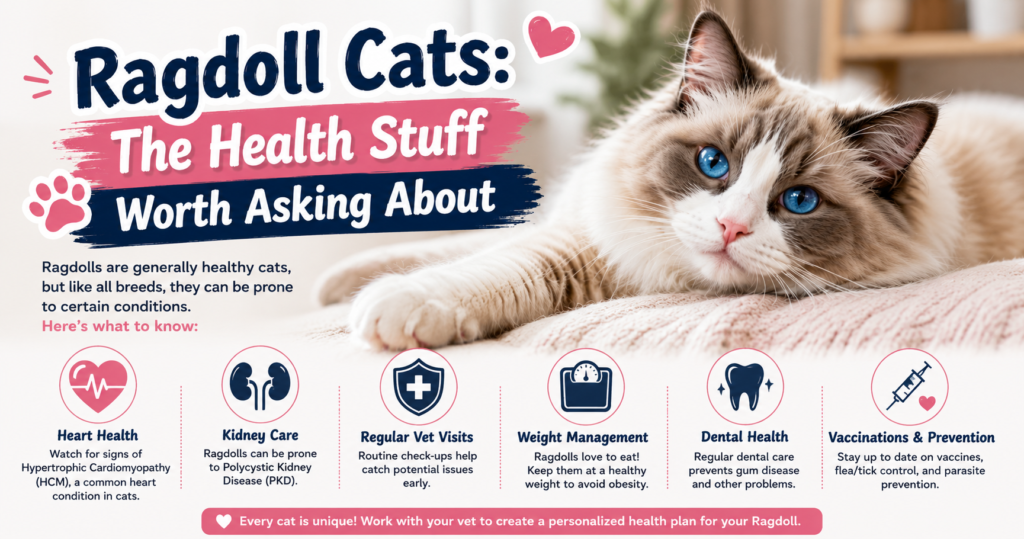
Like a lot of purebred cats, ragdolls carry some breed-specific health risks, and it’s worth bringing these up directly with a breeder or vet rather than assuming. Hypertrophic cardiomyopathy — HCM, a thickening of the heart muscle — shows up more often in ragdolls than in mixed-breed cats. A reputable breeder should be able to show you genetic testing on the parents, not just talk around it. Polycystic kidney disease is another one worth asking about, though it’s less common in this breed than HCM is.
None of this means a ragdoll is fragile, or a bad choice. Most live healthy lives well into their mid-to-late teens. It just means the breeder you choose matters more than it might with a random shelter cat, and regular vet checkups — including periodic heart screenings — are worth the cost over the long run.
Is One Actually Right for Your Household?
If you work from home, you’ve got kids, or you just want a cat that genuinely wants to be near you, a ragdoll is hard to beat. If you’re gone ten hours a day and you’re hoping for a cat that’ll happily entertain itself in another room, you might end up with a lonely, vocal animal who isn’t getting what it needs out of the arrangement — and that’s on you, not the cat. They do fine with a second cat or a calm dog for company if your schedule demands it. A lot of ragdolls actually do better with a companion animal around than completely solo.
Cost-wise, expect somewhere between $800 and $2,500-plus for a kitten from a reputable breeder, depending on lineage and where you’re located, on top of the usual ongoing costs that come with any large-breed cat — food, litter, vet visits. Rescue is worth checking too. Ragdolls and ragdoll mixes do turn up in shelters sometimes, often because an owner didn’t fully grasp the size, or the need for company, before bringing one home.
Bottom Line A ragdoll isn’t just a pretty cat with blue eyes and a soft coat, though it’s definitely that too. It’s a genuinely social animal that wants to be part of your daily life in a way a lot of cats just don’t, wrapped around a temperament so relaxed it can look like something’s wrong with him. It isn’t. If you’ve got the time and attention to give, it’s hard to find a more rewarding cat to live with. If your house sits empty most of the day, though, it’s worth being honest with yourself about whether that’s really fair to an animal that doesn’t want to be alone in the first place.

Mikhaila Olena is a lifestyle writer and content creator behind Living Smart Daily, dedicated to sharing practical ideas, thoughtful insights, and everyday inspiration. With a passion for simple living and meaningful choices, she crafts content that helps readers create a more balanced, organized, and fulfilling life.





One comment on “Ragdoll Cats: Why This “Floppy” Breed Might Be the Most Misunderstood Cat Around”