








The squat rack is always open on Mondays. Always. Everyone claims they want strong legs, but almost nobody wants the fifteen minutes of dread that comes before a heavy set of squats. “I’ll do legs Wednesday” is basically a lie people tell themselves at the start of every week. Wednesday turns into Friday. Friday turns into next Monday, when the excuse starts over.
I trained at a commercial gym for years where you could spot the guys who skipped legs from across the room. Big shoulders, decent arms, and then… calves that looked like they belonged to someone else’s body. It’s a running joke for a reason. But underneath the joke is a real problem — your legs carry the biggest muscles you have, and training around them instead of through them caps what you can build everywhere else.
Why Leg Day Gets Skipped So Often
Part of it is just visibility. Curl your biceps twice and you can flex in a mirror pic that gets likes. Quads don’t work that way. You need actual weight on the bar, real depth, and a willingness to be sore enough that stairs feel personal for two days afterward. Nobody’s rushing to post that.
There’s also the coordination problem, which people underestimate. A bicep curl takes almost no skill. A back squat needs your ankles, knees, hips, and core all working together under load — and if one link in that chain is weak, the whole thing feels wrong. So people drift toward what’s easy and quietly avoid what actually works.
Here’s the thing though. Heavy compound leg work does more for your whole body than isolated arm exercises ever will. Squats and deadlifts trigger a bigger hormonal response than curls or lateral raises do. Keep training legs consistently and you’re not just building legs, you’re supporting growth pretty much everywhere.
What’s Actually Down There
Quads are on the front of the thigh, they straighten the knee, and they do most of the work in squats and leg presses.
Hamstrings run along the back. They control hip extension and they’re the most neglected muscle group in most gyms — mostly because hamstring work doesn’t feel as “productive” as grinding out a heavy squat.
Glutes are the single biggest muscle in the human body. Hip thrusts hit them hard. So does walking uphill, honestly.
Calves get ignored constantly, and then people wonder why their legs still look unfinished after months of squatting three times a week.
Building a Routine Worth Your Time
You don’t need fifteen exercises and ninety minutes. Four or five, done properly, get the job done.
Start heavy while you’re fresh — back squats or trap bar deadlifts. Four sets of eight if size is the goal, fewer reps with more weight if you’re chasing strength instead.
Then move to a hip hinge. Romanian deadlifts or hip thrusts. This is the piece most people skip entirely, and it shows up later as underdeveloped hamstrings. Three sets of ten is plenty.
Add something unilateral — Bulgarian split squats, walking lunges. Training one leg at a time exposes weaknesses a barbell squat can hide, and honestly it builds a kind of balance you don’t get any other way.
Finish with isolation work. Leg curls, extensions, calf raises. None of it builds the foundation, but it fills in the details that make a physique look finished.
A typical session:
Back squat, 4×8. Romanian deadlift, 3×10. Walking lunges, 3×12 per leg. Leg curl, 3×12. Standing calf raise, 4×15.
Not exciting on paper. Works anyway.
Give Recovery Some Respect
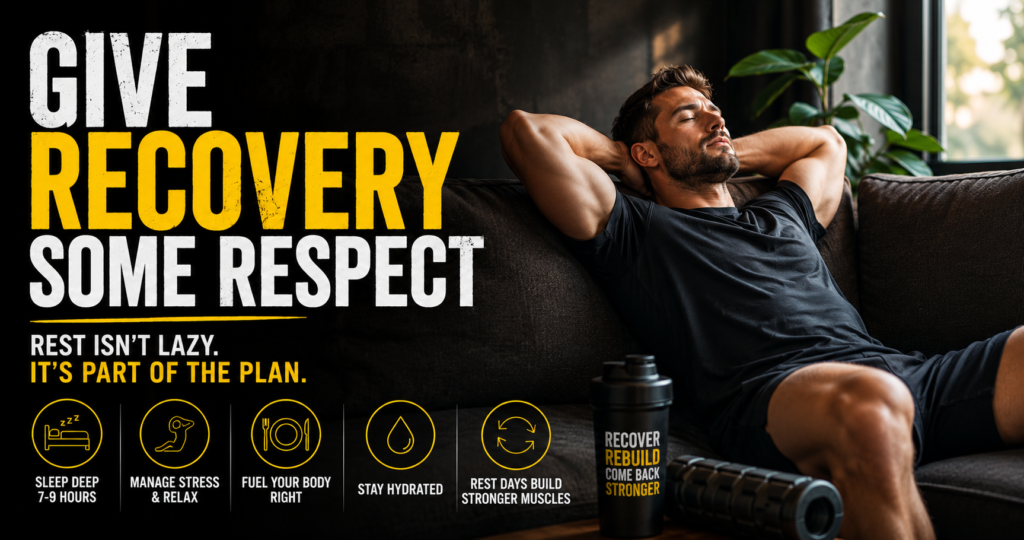
Legs recover slower than most upper body muscles, mostly because there’s more tissue involved and a heavy squat session just wrecks you more than most other lifts. Hit legs hard twice in the same week without enough recovery in between and you’re either going to get hurt or stay chronically sore and undertrained at the same time.
The two days after a brutal leg session matter more than people give them credit for. Sleep properly. Eat enough — don’t skimp here. Walk if you feel like it, but resist the urge to squat again before your body’s actually ready. That impatience is where most setbacks start.
Eating for It
Training tears the muscle down. Food is what rebuilds it, and this is where a lot of people quietly sabotage their own progress.
Spread your protein across the day instead of loading it all into one meal. Don’t cut calories too aggressively on the days you’re training legs hard — they’re expensive to run metabolically, and starving them just blunts recovery. Carbs aren’t the enemy either. Heavy lower-body work burns through glycogen fast, and carbs are what refill it.
Mistakes I See Constantly
Ego lifting on squats. Loading more weight than your form can actually handle, cutting the depth short just to move it. Looks impressive for two or three reps, then falls apart.
Skipping hamstrings and glutes almost entirely, which leaves people with quad-heavy legs that look lopsided and are honestly more injury-prone.
Training legs once every couple weeks and somehow expecting the same results as someone training them weekly. That math doesn’t work.
Forgetting calves exist. This one happens to almost everyone at some point.
Bottom Line
No secret exercise here, no trick nobody’s told you about. Real leg strength comes from consistent effort on lifts that are genuinely uncomfortable, backed by recovery and food that actually support the work. It’s not glamorous, not even a little. But few things in the gym pay off as reliably as a leg day you actually show up for.

Mikhaila Olena is a lifestyle writer and content creator behind Living Smart Daily, dedicated to sharing practical ideas, thoughtful insights, and everyday inspiration. With a passion for simple living and meaningful choices, she crafts content that helps readers create a more balanced, organized, and fulfilling life.





One comment on “Leg Day Done Right: The Muscle and Fitness Legs Guide That Actually Builds Size”