









I used to think goldfish just didn’t live very long. Everyone I knew growing up went through the same routine — win one at a school fair, bring it home in a little bag of water, watch it swim around a bowl for a few weeks, then quietly replace it before anyone asked too many questions. It felt normal. Almost expected.
It isn’t normal. A goldfish that’s actually cared for properly can live well into its teens, sometimes past twenty. There are documented pet goldfish that made it past thirty. So the die-in-a-month thing everyone treats as inevitable? That’s not the fish being fragile. That’s almost always us getting the setup wrong.
Why the Bowl Has to Go
Goldfish bowls are everywhere in movies, cartoons, home décor catalogs — a single orange fish circling a little glass sphere on a countertop. It’s a nice image. It’s also a pretty rough way to keep a living animal.
Here’s the actual problem: bowls have almost no surface area, so barely any oxygen gets into the water. Meanwhile goldfish produce a lot of waste for their size, and in a few gallons (or less) of standing water, ammonia climbs fast. That fish isn’t living comfortably — it’s slowly being poisoned by its own environment, and “slowly” often means weeks, not months.
And that’s before you factor in size. Common and comet goldfish can grow past 10 inches given the room. Even the chunkier fancy varieties — orandas, ranchus, that type — need far more space than a bowl was ever designed to offer.
What Goldfish Actually Need to Thrive
Space, more than you’d think
A single fancy goldfish needs at least 20 gallons. Commons and comets, which grow long and fast, do better with 30-50 gallons for just one fish, and more again for each additional one. This isn’t an arbitrary rule — bigger volumes dilute waste, which buys you time before things go wrong.
A tank that’s already cycled
This is the step most beginners skip, and it’s probably the single biggest killer of new goldfish. Before any fish goes in, the tank needs to run through what’s called the nitrogen cycle — basically, letting beneficial bacteria colonize the filter so they can break down ammonia before it builds up to lethal levels. Skip this and you get what a lot of hobbyists call “new tank syndrome,” where a perfectly healthy fish dies within its first two weeks for no obvious reason. There is a reason. It’s just invisible.
Cooler water than you’d expect
Goldfish aren’t tropical fish. They actually prefer things on the cooler side — somewhere around 65-72°F. Most homes don’t need a heater for them at all. What they do need is regular water changes, roughly 20-30% a week, to keep nitrate down and the water chemistry stable.
Room to actually grow
A small tank doesn’t keep a goldfish small in any healthy way — it stunts them. And stunting isn’t some cute side effect; it’s organ and skeletal stress that tends to cut a fish’s life dramatically short. If you’re buying the fish thinking “it’ll just grow to fit the tank,” that’s backwards. The tank has to fit the fish’s future size, not its current one.
Feeding: Less Than You Think
Goldfish beg. Constantly. They’ll act starving five minutes after being fed, and it’s easy to fall for it. But their digestive tracts are pretty simple, and overfeeding is one of the most common causes of swim bladder issues — the kind where a fish suddenly can’t control whether it floats or sinks properly.
A reasonable rule: feed once or twice a day, only as much as the fish can finish in about two minutes. Mixing things up helps too — decent pellets, the occasional shelled and softened pea, some blanched vegetables now and then. Flakes alone aren’t doing them any favors long-term.
What a Healthy Goldfish Looks Like
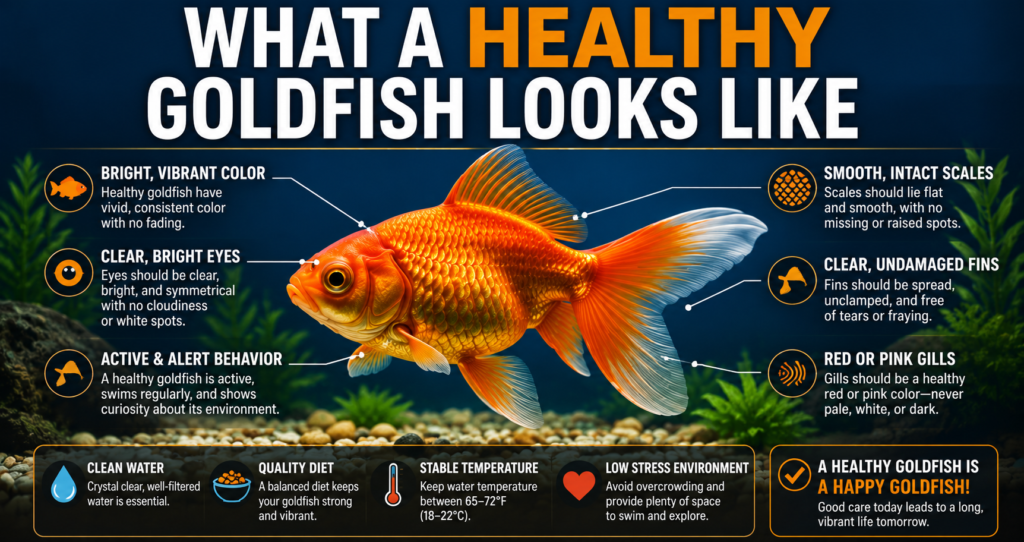
Watch for:
- Eyes that are clear, swimming that’s steady and even
- Fins held up, not clamped down against the body
- An appetite that shows up reliably
- Scales that are smooth — no red streaking, sores, or odd growths
If a fish is gasping at the surface, sitting motionless on the bottom, or holding its fins tight against its sides, that’s usually a water quality issue talking, not a personality trait.
Choosing Tank Mates
Goldfish generally do best with other goldfish around the same size. Fast tropical fish tend to out-compete them for food, and a lot of tropical species want warmer water than goldfish are happy in anyway. If you’ve got a rounder, slower fancy variety, keep them away from nippy, quick fish that could stress them out or shred their fins.
Bottom Line
Goldfish get treated like the easiest pet in the store — cheap, disposable, low effort. That reputation is undeserved. If anything, they’re one of the more demanding freshwater fish out there, mostly because people underestimate how much waste they produce and how big they actually get.
Give one the space, the cycled tank, and the food it actually needs, and the “goldfish only live a few months” thing stops being true. You get a fish you’re raising for decades, not one you’re quietly replacing every spring.

Mikhaila Olena is a lifestyle writer and content creator behind Living Smart Daily, dedicated to sharing practical ideas, thoughtful insights, and everyday inspiration. With a passion for simple living and meaningful choices, she crafts content that helps readers create a more balanced, organized, and fulfilling life.





One comment on “Goldfish 101: The Real Reason Most Pet Goldfish Never Make It Past Year One”