









I didn’t expect Zara to be the brand that finally got me to stop buying bedding from wherever happened to have a sale. But that’s exactly what happened, and it’s taken me a while to figure out why because on paper, a clothing retailer branching into sheets and duvet covers shouldn’t feel like a natural fit. It does, though, once you actually look at what they’re doing with it.
Zara Home Isn’t Really “Zara” the Way You’d Expect
Worth clearing this up first, because it trips people up. Zara Home operates as its own separate company under Inditex the same parent group behind Zara clothing, but a genuinely distinct brand with its own stores, its own website, and its own design direction. It’s been around since 2003, so this isn’t some recent side project; it’s a company with over two decades of purely home-focused product development behind it.
That matters because it explains why the quality and design sensibility feel more considered than what you’d get from a clothing brand slapping its name on some sheets as an afterthought. Textiles make up the large majority of what Zara Home sells, and bedding specifically is one of the categories they clearly put real thought into.
What’s Actually in the Bedding Lineup
The range is broader than I expected going in. Flat sheets and fitted sheets sit at the base of the collection, made across cotton, linen, and blended fabrics depending on what you’re after cotton if you want something crisp and classic, linen if you’re after that more relaxed, textured look that’s been having a real moment in home design lately.
Pillowcases follow the same fabric logic, and this is where a lot of the personality in the collection actually shows up subtle stitching, decorative edges, small details that keep things interesting without turning your bed into a design statement you get tired of in six months.
Duvet covers are probably the strongest part of the lineup. They come in linen, washed cotton, and waffle-texture options, in both plain designs and pieces with embroidery or light prints. And then there’s the bedspread category I’ve genuinely become a fan of the washed linen bedspreads specifically. There’s a lived-in, slightly rumpled quality to washed linen that looks intentional rather than sloppy, which is a hard balance to strike with bedding.
The Color Palette Does a Lot of Work
One thing that separates Zara Home from a lot of competitors in this space: the color range leans heavily neutral. Sand, cream, soft greys, muted earth tones. That’s a deliberate choice, and it’s part of why the pieces mix so easily a flat sheet from one collection will generally pair fine with a duvet cover from a completely different one, because nothing in the palette is fighting for attention.
If you’re the type who likes to swap out bedding seasonally or refresh a room without buying an entirely new set every time, that neutral-first approach genuinely saves money and effort over time. You’re building a base you can layer onto rather than starting over.
How the Quality Actually Holds Up
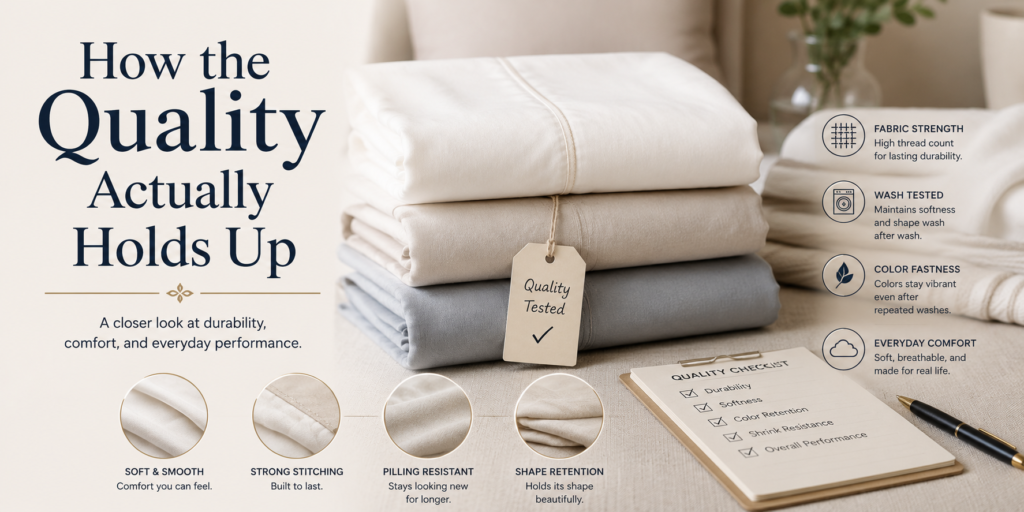
This is the part that convinced me to keep buying from them rather than treating it as a one-off purchase. The fabric quality on the mid-to-higher tier pieces the linen especially holds up well through repeated washing, which is genuinely the test that matters most with bedding. Cheap sheets pill and thin out fast. These haven’t, at least not at the rate I’ve seen with other mid-range brands.
Where I’d manage expectations a bit: the very entry-level pieces in cotton blends are fine, but they’re closer to what you’d expect from any decent mid-range retailer comfortable, serviceable, not going to blow you away. The real value shows up once you move into the linen and washed-cotton tiers.
Pricing: Not Cheap, Not Designer Either
Zara Home sits in a similar spot to Zara’s clothing line, price-wise meaningfully more than a basic big-box bedding set, but well under what you’d pay for a comparable linen set from a dedicated luxury home brand. It’s positioned as accessible upgrade territory: paying a bit more than the bare minimum to get something that actually looks and feels considered, without stepping into the price range where a single duvet cover costs as much as a full bedroom refresh elsewhere.
The brand also updates its collections biweekly and typically drops two major seasonal ranges a year, which mirrors the same “keep it moving” approach Zara takes with clothing. If you see a piece you like, it’s worth acting on it the catalog doesn’t sit static for long.
Who This Actually Makes Sense For
If you want a bedroom that looks put-together without going full interior-designer budget, this is a genuinely good middle path. It works especially well if you already lean toward a neutral, slightly minimal aesthetic, since that’s exactly where the collection’s strongest. If you’re after bold color, loud pattern, or maximalist bedroom design, you’ll probably find the range a bit restrained for your taste that’s just not the lane Zara Home is playing in. But for anyone who wants their bed to look like it belongs in a magazine spread without the magazine-spread price tag, it’s one of the more reliable places to actually get there.

Mikhaila Olena is a lifestyle writer and content creator behind Living Smart Daily, dedicated to sharing practical ideas, thoughtful insights, and everyday inspiration. With a passion for simple living and meaningful choices, she crafts content that helps readers create a more balanced, organized, and fulfilling life.