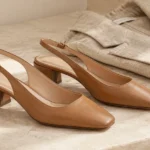







You find a pair of shoes you love. The listing says “leather.” The price feels fair. Then they arrive, and something feels off: a plastic shine, a stiff edge, a smell that’s more chemical than natural.
Yeah, it happens to a lot of people. The word “leather” gets stretched across very different materials, so the only reliable habit is learning to read what the label actually says. This guide covers the label first, then six quick physical checks you can do at home or in a shop.
Shopping for a specific pair? Our [Zara leather slingback shoes guide] shows how this applies to one popular brand.
Start With the Label, Not the Photo
Product photos can’t tell real leather from a good imitation. Text can. On a website, scroll to the composition or materials section. In a store, check the inner tongue, the insole, or the sole.
Many shoes carry a small pictogram that shows three zones: the upper, the lining and insole, and the outsole. In regions that use the standard footwear labeling system, a shoe-shaped symbol means leather, and a crossed-out or different symbol means another material. If a zone is marked as textile or “other materials,” the shoe isn’t leather there.
Decode the Words on the Tag
Marketing terms are where most confusion starts. Here’s what each one usually means:
- Full-grain leather: The top layer of the hide with the natural surface left mostly intact. It’s the strongest and ages well.
- Top-grain leather: Similar, but the surface is lightly sanded. Still a solid choice.
- Corrected-grain leather: The surface is sanded and then given an embossed grain pattern. Common at mid-range prices.
- Genuine leather: This is real leather, but it often refers to lower layers of the hide. The name sounds premium, but it isn’t the top grade.
- Split leather (including suede): Cut from the lower layer. Fine for suede finishes, less durable when coated.
- Bonded leather: Leather scraps and fibers glued together with a binder. It’s mostly not what people picture when they say leather, and it tends to peel.
- Vegan leather, faux leather, PU, polyurethane, and man-made: Not animal leather. Some are decent; many crack with age.
One thing to keep in mind: a label confirms the material, not the grade. A shoe can be honestly labeled “leather” and still be average quality.
Six Quick Checks You Can Do Yourself
Labels first, then confirm with your senses. None of these is perfect alone, so use two or three together.
1. Look at the Grain
Real leather has small, uneven pores and slight variations, like skin. Imitation material usually shows a repeating, identical pattern. Hold the shoe under good light and compare spots a few centimeters apart. Honestly, corrected-grain leather can fool this test, because the pattern is pressed in.
2. Check the Edges
Look at a cut edge, such as inside the opening or under the strap. Real leather shows a fibrous, slightly rough edge. Synthetic material often shows a smooth plastic layer on top of a fabric backing, almost like a sandwich.
3. Press and Flex
Press a finger into the surface. Real leather wrinkles in fine, irregular lines, like skin does. Plastic-coated material tends to form larger, sharper folds or springs back flat.
4. Smell It
Leather has a warm, earthy smell. Synthetic materials often smell like glue or plastic. Some real leather is heavily treated, so a faint chemical note doesn’t automatically mean fake, but a strong plastic smell is a red flag.
5. Try the Water Drop Test
Place a tiny drop of water on a hidden spot. Untreated real leather slowly absorbs it and darkens slightly. Synthetic material and heavily coated leather let it bead and roll off. Finished leather often repels water, so treat this as a hint, not proof. Don’t try it on suede.
6. Feel the Temperature and Weight
Real leather warms up quickly in your hand and feels a bit heavier than plastic alternatives. Synthetic material tends to feel cooler and lighter, though this one takes practice.
What About the Burn Test?
You’ll see this suggested online: burn a tiny thread and sniff the smoke. I’d skip it. It damages the shoe, it’s a fire risk, and the result is hard to read, since coated leather also smells odd when burned. The checks above are safer and nearly as informative.
Red Flags When Shopping Online
Without the shoe in your hands, look for these warning signs:
- No composition section at all
- Only “premium material” or “luxury finish” with no material named
- A very low price paired with the word “leather”
- Reviews mentioning peeling, cracking, or a plastic smell
- Stock photos only, with no close-up of the surface
Brands that list upper, lining, and sole separately are usually the easiest to trust. If a retailer shows the breakdown, read it before you hit buy. And check the return policy, so you can inspect the material when it arrives.
Is Real Leather Always Better?
Not always. Good faux materials can be waterproof, lighter, and easier to clean. Cheap real leather can crack faster than a decent synthetic. What matters is paying a fair price for what you’re actually getting. If a shoe is honestly labeled synthetic and priced that way, there’s nothing wrong with it. The problem starts when the label and the price imply something the material doesn’t deliver.
For leather you do own, good care extends its life. We cover that in our upcoming guide on [how to clean and care for leather shoes at home].

Mikhaila Olena is a lifestyle writer and content creator behind Living Smart Daily, dedicated to sharing practical ideas, thoughtful insights, and everyday inspiration. With a passion for simple living and meaningful choices, she crafts content that helps readers create a more balanced, organized, and fulfilling life.