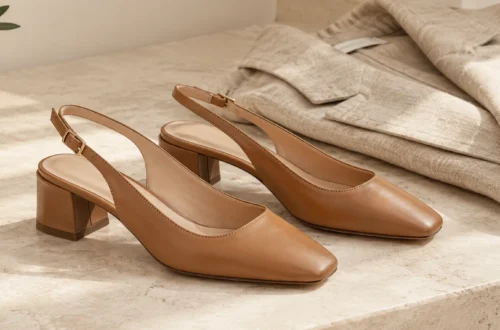
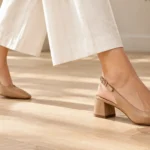
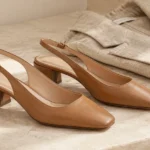






You put on a pair of slingbacks you love. They look perfect. Then you take ten steps and the back of the shoe starts flapping like a loose flip-flop.
Frustrating, yes. But it’s also one of the most fixable shoe problems out there. Most of the time, slipping comes down to one of three things: the size, the strap, or the shape of your heel. This guide walks through how to work out which one it is, then gives you nine fixes, starting with the cheapest and fastest.
If you’re still shopping, our [pillar guide to Zara leather slingback shoes] covers what to check before you buy so you avoid the problem from the start.
Why Do Slingbacks Slip Off in the First Place?
A slingback has no solid heel cup. Only the strap holds the shoe against your foot, so even a small gap becomes a big problem once you start walking.
Here are the usual causes:
- The shoe is too big. Even half a size extra gives your foot room to slide forward and your heel room to lift.
- The strap is too loose or too stretchy. Elastic loses grip over time, and leather straps stretch with wear.
- The strap sits too low. If it rests below the ankle bone, it slides down your heel with each step.
- Your heel is narrow. Some lasts (the foot-shaped mold a shoe is built on) are cut wide at the back, and a slim heel swims in them.
- Sweaty feet. Moisture makes leather and skin slippery, especially in summer.
- The shoe is brand new. Stiff leather hasn’t molded to your foot yet.
A quick self-test: stand up, take five steps, and watch the heel. If the whole shoe lifts, it’s a size or last problem. If only the strap shifts, it’s a strap issue. If your foot slides inside the shoe, it’s usually sweat or a slick lining.
Fix 1: Tighten or Re-Buckle the Strap
Start here, because it costs nothing. Move the buckle one hole tighter and walk around for a few minutes.
The strap should sit snug just above the ankle bone, not on the soft part of your heel. It should feel firm but let you slip a fingertip underneath. If you can’t tighten it any further and it’s still loose, you’ve found a problem for Fix 7.
Fix 2: Add Heel Grips
Heel grips are thin, self-adhesive cushions that stick to the inside back of the shoe. They fill the space behind your heel and add friction, so the shoe stays put.
They work best for shoes that are slightly big, not wildly big. Pick a suede-textured or foam version, press it on a clean, dry lining, and give the adhesive a few hours to set before wearing. A word of caution from experience: cheap grips can bunch up after a long day, so buy a decent pair.
Fix 3: Try Gel Strips or Ball-of-Foot Cushions
Not all slipping starts at the heel. If your foot slides forward, your heel loosens, and the strap has to work harder.
A gel cushion under the ball of your foot holds your weight further back and keeps you from sliding toward the toe box. It also takes pressure off the front of your foot, which is a bonus in higher heels. Pair this with Fix 2 for stubborn pairs.
Fix 4: Use a Thin Insole
A half-length or full insole takes up extra volume. If your slingbacks feel a bit loose all over, a thin leather or foam insole can bring the fit closer without making the shoe tight.
Keep it thin. A thick insole raises your foot and can make your heel pop out even more. Test with both shoes before committing, because you’ll feel the difference in the first few steps.
Fix 5: Deal With Sweat
Sweaty feet are the quiet cause of a lot of slipping. A shoe that fits fine at 9 a.m. can turn slippery by lunchtime on a warm day.
Try a light foot powder or a roll-on foot antiperspirant the night before, so it has time to dry. Some people use clear fashion tape on the strap’s inner side for extra grip. Skip lotions and oils on your feet before wearing slingbacks, since they make leather slick.
Fix 6: Soften Stiff Leather Gradually
Brand new leather resists your foot’s shape, which can leave a gap at the back. Wear the shoes at home for an hour or two over several days. Warmth and movement help the leather mold around your heel.
Don’t try to shortcut this with heat or heavy stretching sprays on a strap. You can weaken thin leather, and a snapped strap is much harder to fix than a loose one. For more on this, see our upcoming guide on [how to break in new leather shoes].
Fix 7: Ask a Cobbler to Adjust the Strap
This is the permanent solution, and it’s cheaper than most people expect. A cobbler can:
- Add a new buckle hole closer to the end
- Shorten the strap and reattach it
- Sew a small elastic panel into a rigid strap for flexibility
- Add a thin leather lining patch to the heel area for grip
Bring the shoes in, wear them with the socks or tights you’d normally use, and show exactly where the strap slides. Prices vary by city and repair, so ask for a quote first. For a pair you wear often, it’s usually worth it.
Fix 8: Check Your Size (and Consider Going Down)
If nothing above works, the shoe may simply be too big. For closed-toe leather slingbacks, a half size down often gives a better result than any grip, because leather softens a little and the strap keeps the heel secure.
On the other hand, don’t squeeze into a smaller size if your toes feel cramped. Cramped toes plus a tight strap leads to blisters, and you’ll stop wearing the shoes entirely. When in doubt, measure your foot in the evening, when it’s slightly larger, and compare it to the brand’s size chart. Fit varies from one style to the next, so a size that works in one pair may not carry over to another.
Fix 9: Pick Better Features Next Time
Sometimes the honest answer is that this pair isn’t right for your foot. When you shop again, look for:
- An adjustable buckle rather than a fixed strap
- A strap that sits higher, closer to the ankle bone
- A lower, stable heel such as a kitten or block style
- A leather or suede-lined interior with some grip
- A padded heel area
Reading product reviews for phrases like “heel slips” or “runs big” can save you a return. And if you’re comparing brands, wait for our upcoming guide on [Zara vs Mango vs H&M slingbacks].
When to Stop Trying
Not every shoe can be saved. If you’ve tried the strap, grips, and a cobbler visit and your heel still lifts, the last probably doesn’t suit your foot shape. Return it if you’re still within the window, or sell it on and look for a different brand. That’s not a failure on your part. Feet and shoe molds just don’t always match.

Mikhaila Olena is a lifestyle writer and content creator behind Living Smart Daily, dedicated to sharing practical ideas, thoughtful insights, and everyday inspiration. With a passion for simple living and meaningful choices, she crafts content that helps readers create a more balanced, organized, and fulfilling life.