




Every so often a search term shows up that looks almost too simple to have real intent behind it — “400×400 black image” is one of those. On the surface, it just sounds like someone wants a black square. And they do. But the reasons people are looking for one, and what they end up doing with it, are actually a lot more interesting than the search itself suggests.
What People Actually Mean by This
If you’ve landed here searching for that exact phrase, chances are you fall into one of a few camps. Some people want a completely blank, solid-black square sized at 400 by 400 pixels to use as a temporary profile picture. Some are trying to recreate the look of a suspended or deactivated account, where platforms sometimes default to a plain dark image. Others just want a minimal, blacked-out avatar as a design choice — no face, no logo, nothing, just black.
There’s also a smaller group using it for practical, non-social reasons: developers testing how an app or website handles image uploads, designers who need a placeholder while building a layout, or anyone who just needs a neutral dark square to drop into a mockup before the real image is ready.
Whatever the reason, the common thread is the same. People aren’t looking for a stock photo or anything fancy. They want exactly what it says: a plain black square, sized 400×400, ready to use.
Why 400×400 Specifically
The dimension isn’t random. 400×400 pixels has become something close to a universal standard for profile pictures across social platforms, most notably X (formerly Twitter), where it’s the officially recommended upload size for avatars. Uploading a square image at that exact resolution means the platform doesn’t need to stretch, compress, or awkwardly crop your picture when it displays it in a circle across feeds, replies, and notifications.
Other platforms use similar or identical dimensions for their own profile images, which is part of why 400×400 has become the go-to size whenever someone needs a “generic” profile-picture-shaped image, black or otherwise. It’s small enough to load fast, but large enough to still look sharp when scaled down to the tiny sizes profile pictures often get displayed at.
The Blackout Trend
One of the more culturally interesting reasons this search spikes from time to time is the blackout profile picture trend. Every so often, in response to a particular event, cause, or moment of collective online mourning or protest, large groups of users will temporarily swap their profile pictures to solid black as a visual show of solidarity. It’s simple, it’s unmistakable, and it doesn’t require any design skill — which is exactly why a plain black square becomes so widely searched for during these moments.
Because this trend tends to happen in waves tied to current events, search interest in a plain black image can jump dramatically overnight and then fade just as quickly once the moment passes. If you’ve noticed a sudden flood of black profile pictures on your feed, this is almost always why.
Suspended and Deactivated Account Placeholders
There’s also a more technical reason people go looking for this image. Some platforms, when an account is suspended, deactivated, or hasn’t uploaded a profile picture at all, display a dark or black placeholder image in place of the user’s usual avatar. People trying to recreate that specific look — for design mockups, memes, or just out of curiosity — often end up searching for the exact black square used in that scenario, even if what they actually need is any plain black image of the right dimensions.
Minimalist Branding and Personal Aesthetic
Not every reason is tied to a trend or a technical quirk. Plenty of people simply like the aesthetic. A solid black profile picture reads as clean, mysterious, and deliberately understated — the opposite of the usual selfie or logo. For personal accounts going through a rebrand, taking a break from social media, or just wanting a moment of visual quiet, a black square does the job without demanding any design work at all.
It’s also become something of a placeholder move for people between profile pictures — swap in black while you figure out what you actually want to use next, rather than leaving your old picture up or leaving the slot empty.
How to Get One (Without Overcomplicating It)
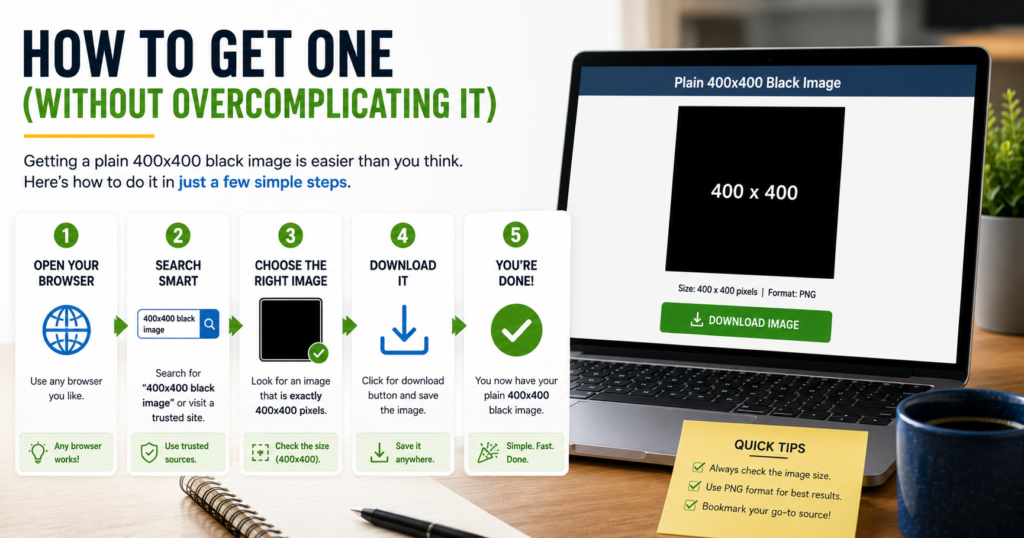
The good news is that a 400×400 black image doesn’t require any real design skill or software to make. Here are the simplest routes:
Use a free online image generator. Several free tools let you type in custom dimensions, pick a solid color, and export a PNG or JPG instantly. Setting the width and height to 400 pixels each and choosing pure black (hex code 000000) gets you exactly what you need in under a minute.
Use basic photo editing software. If you have access to something like Photoshop, GIMP, or even a simpler tool like Canva or Photopea, you can create a new blank canvas at 400×400 pixels, fill it entirely with black, and export it as a PNG or JPG. This method gives you a bit more control if you want to add subtle branding or a watermark later.
Search for a pre-made file. Because so many people need this exact image, plain black 400×400 squares are already floating around on image-sharing sites and stock platforms, ready to download directly without creating anything yourself.
Screenshot method. In a pinch, opening any solid-color image editor or even a blank presentation slide, filling it with black, and cropping a square screenshot to 400×400 will get the job done, though it’s the least precise option of the bunch.
A Few Practical Tips
If you’re planning to use this as an actual profile picture, keep the file size reasonable — most platforms cap uploads at a couple of megabytes, and a solid black square should be tiny in file size regardless of format, so this usually isn’t an issue. PNG is generally the safer choice over JPG for solid colors, since JPG compression can sometimes introduce faint artifacts or banding on completely flat colors, even if they’re barely noticeable at a glance.
If you’re using the image for testing or development purposes rather than as a public profile picture, it’s worth double-checking the exact pixel dimensions after export. Some tools round dimensions slightly or add unwanted padding, which can throw off automated tests expecting an exact 400×400 file.
Final Thoughts
A search as simple as “400×400 black image” turns out to have a surprising amount going on underneath it — cultural moments, platform quirks, personal aesthetic choices, and plain technical necessity all pointing toward the same tiny, unremarkable file. The good news is that whatever your reason for needing one, actually getting your hands on a plain black square sized exactly right takes less time than it took to read this article. A blank canvas, one color, correct dimensions, done.

Mikhaila Olena is a lifestyle writer and content creator behind Living Smart Daily, dedicated to sharing practical ideas, thoughtful insights, and everyday inspiration. With a passion for simple living and meaningful choices, she crafts content that helps readers create a more balanced, organized, and fulfilling life.


