









I used to think booking a hotel was the easy part. Pick the dates, pick a place that looks nice in the photos, hand over the card number, done. Then I got burned. Twice, actually, in the same year — once by a “resort fee” that doubled my nightly rate at checkout, and once by a room that looked nothing like the listing because I’d booked through a third-party site that had no real relationship with the property. That second one taught me more about how the hotel industry actually works than any travel blog ever did.
So this isn’t a listicle of generic tips pulled from a search results page. This is what I wish someone had told me before I lost money to something that was, frankly, avoidable.
The “Sold Out” Timer Is Usually a Lie
You’ve seen it. The little red banner that says “Only 1 room left at this price!” or a countdown clock ticking down like the deal expires the second you close the tab. Booking platforms use these because they work urgency short-circuits the part of your brain that would otherwise stop and compare prices.
Here’s the thing. That “1 room left” message is almost never about the entire hotel. It’s about the specific rate category you’re viewing, on that specific platform, at that specific moment. Refresh the page an hour later and the timer resets. I’ve watched it happen. The hotel didn’t suddenly find another room; the software just wanted you to feel rushed.
If you see urgency messaging, treat it as a cue to slow down, not speed up. Open the hotel’s own website in another tab. Compare.
Third-Party Sites Aren’t Always Talking to the Hotel Directly
This one cost me an actual bad night’s sleep, and not the metaphorical kind. I booked through an aggregator that had, it turned out, purchased a block of rooms from the hotel weeks earlier then resold them at a markup with a description that didn’t match what the hotel currently offered. When I arrived, the front desk had no record tied to my confirmation number under their own system. It got sorted out, eventually, after forty-five minutes and a phone call to a call center in a different time zone.
Aggregator sites can absolutely offer real savings. But when a deal looks meaningfully better than what the hotel lists on its own site, it’s worth a two-minute gut check: does this platform have direct integration with the property, or is it reselling inventory? A quick call to the hotel’s front desk, using the number from their official website, will confirm your reservation actually exists in their system before you’re standing in a lobby at 11 p.m. finding out otherwise.
Resort Fees Are the Industry’s Worst-Kept Secret
Nobody loves talking about this, hotels least of all, because burying the fee works in their favor. The nightly rate you see during search results is frequently not the rate you pay. Resort fees, destination fees, amenity fees different names, same function get added at checkout or, worse, mentioned only in fine print you’d need to actively seek out to find.
I now do one thing before booking anything with “resort,” “spa,” or “beach club” anywhere in the name: I search the hotel name plus “resort fee” before I ever hit confirm. Takes thirty seconds. Has saved me from at least three unpleasant surprises.
Cancellation Policies Deserve More Attention Than They Get
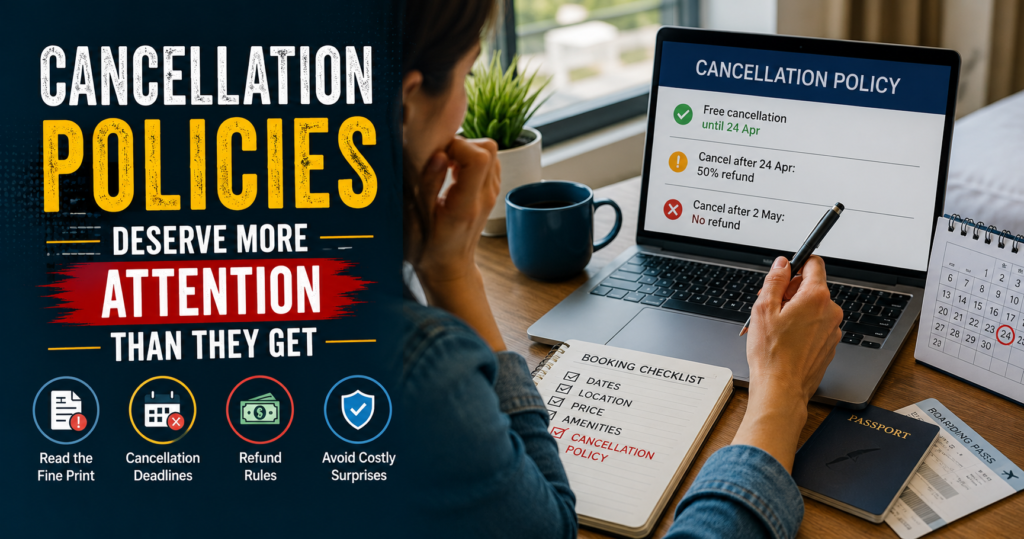
Plans change. Flights get cancelled, people get sick, work happens. And yet cancellation policy is often the last thing anyone reads, if they read it at all.
“Free cancellation” doesn’t always mean free cancellation up until check-in. Sometimes it means free cancellation up to 24 hours before, or 48, or with a processing fee regardless of timing. I’ve made it a habit to screenshot the cancellation terms at the time of booking not because I distrust every hotel, but because policies get reworded, and having your own record removes any ambiguity if a dispute comes up later.
Booking Direct Isn’t Always Cheaper, But It’s Often Smarter
There’s a persistent idea that third-party sites always beat the hotel’s own rate. Sometimes true. Not always. What booking directly usually gets you, even at an identical price, is a direct line of communication if something goes wrong, eligibility for loyalty points, and a much easier time requesting upgrades or early check-in.
My rule now: compare prices across two or three platforms and the hotel’s own site, but if the difference is small say, under ten percent book direct. The convenience is worth more than the marginal savings.
What I Actually Do Now
None of this requires becoming a professional travel researcher. It’s a handful of habits: check the hotel’s own site before trusting a third-party deal, search for resort fees before confirming, screenshot the cancellation policy, and treat countdown timers with mild suspicion rather than urgency. Takes maybe five extra minutes per booking. Has saved me hours of frustration, and more money than I’d like to admit I almost lost. Travel planning is supposed to be the fun part. A little skepticism at the booking stage is what keeps it that way.

Mikhaila Olena is a lifestyle writer and content creator behind Living Smart Daily, dedicated to sharing practical ideas, thoughtful insights, and everyday inspiration. With a passion for simple living and meaningful choices, she crafts content that helps readers create a more balanced, organized, and fulfilling life.





One comment on “Hotel Booking Mistakes That Quietly Wreck Every Trip”