









I used to book flights the way most people do open a search engine, type in the dates, grab whatever looked cheapest in the first five results, close the tab feeling accomplished. Then a friend who used to work airline ops sat me down and explained, patiently, how much of that “cheapest option” was an illusion built on timing and search history. That conversation cost me nothing. Ignoring it, over the years before, had probably cost me hundreds of dollars.None of what follows is complicated. It’s just the stuff nobody tells you until you’ve already booked the wrong flight at the wrong time for too much money.
Incognito Mode Isn’t Superstition
There’s a persistent rumor that airline sites raise prices based on how many times you’ve searched a route, and for a long time I dismissed it as travel-forum folklore. Then I ran the test myself same flight, same dates, one search in a normal browser window and one in incognito, spaced twenty minutes apart. The regular window showed a price eleven dollars higher.Eleven dollars isn’t life-changing. But the mechanism behind it is worth understanding. Dynamic pricing algorithms respond to demand signals, and repeated searches for the same route can register as demand, even if it’s really just one person checking back three times. Clearing cookies or using a private window removes that signal. Cheap insurance against paying more for no reason.
The “Best Day to Book” Advice Is Mostly Outdated
For years, every travel article repeated the same claim: book on a Tuesday, book six weeks out, book at 3 p.m. I believed it too, until I started paying closer attention to how airline pricing has changed. Modern fare algorithms are far more responsive to real-time demand and fuel costs than they are to the day of the week. The old Tuesday rule came from a time when airlines released fare sales on a predictable schedule that schedule doesn’t really exist anymore.What actually moves the needle now is tracking a specific route over time using a fare alert tool, rather than trying to guess a magic day. Set an alert for the route you want, let it run for two or three weeks, and you’ll start to see the real pattern for that specific flight instead of a generic rule that may not apply to it at all.
Budget Airlines Aren’t Always the Budget Option
I learned this one the expensive way, on a trip where the base fare was genuinely half the price of the legacy carrier until I added a checked bag, a seat selection, and boarding priority, at which point it came out roughly even. Ultra-low-cost carriers make their margin on fees that used to be included in every ticket: bags, seats, sometimes even printing a boarding pass at the airport instead of doing it yourself online.Before comparing a budget fare against a full-service one, I now price out the actual trip I’m taking bag included, seat assigned, whatever add-ons I know I’ll need rather than comparing the bare base fares against each other. Sometimes the budget airline still wins. Often it’s a wash, and the legacy carrier’s extra flexibility ends up worth more.
Multi-City and Open-Jaw Bookings Deserve a Second Look
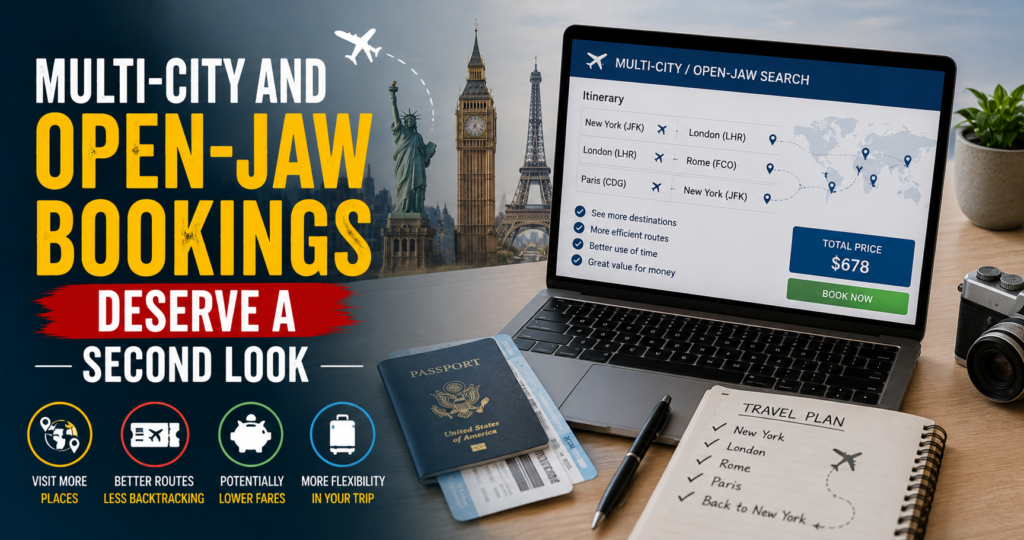
Most people book round trip out of habit, point A to point B and back to point A, because that’s the default the search box gives you. But if your trip involves visiting more than one place, flying into one city and out of another can be cheaper than backtracking to your original arrival airport and it saves the time and money of an internal connection you’d otherwise have to book separately.It takes a slightly more deliberate search most booking sites bury the multi-city option instead of leading with it but for any trip with more than one stop, it’s worth the extra two minutes to check.
Airline Website vs. Third-Party Aggregator
Aggregator sites are genuinely useful for comparison shopping, and I still use them for that first pass. But once I’ve found a fare I want, I book directly with the airline whenever the price is close. Direct booking means the airline itself handles rebooking if a flight gets cancelled or delayed, rather than routing you through a third party’s customer service queue during an already stressful moment. It also means any miles or status credit lands in your account automatically, and refunds when they’re owed come from a single source instead of two companies pointing at each other.
What I Actually Do Now
Search in a private browser window. Set a fare alert instead of chasing a mythical booking day. Price out the full trip, fees included, before assuming a budget airline is actually the budget option. Consider whether a multi-city routing fits before defaulting to round trip. And when the price is close, book direct.None of it guarantees the lowest possible fare every time nothing does. But it turns flight booking from a guessing game into something closer to a system. That’s worth more than any single trick.

Mikhaila Olena is a lifestyle writer and content creator behind Living Smart Daily, dedicated to sharing practical ideas, thoughtful insights, and everyday inspiration. With a passion for simple living and meaningful choices, she crafts content that helps readers create a more balanced, organized, and fulfilling life.





One comment on “The Flight Booking Habits That Actually Save Money”