


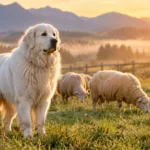






A coyote doesn’t need long to ruin a small farm. One night, a handful of lost lambs, and suddenly the fence you trusted looks flimsy. That’s usually the moment people start searching for a livestock guardian dog.
So what is one, exactly, and is it right for your property? This guide covers what these dogs do, which breeds suit which farms, how to raise a puppy properly, and what mistakes cost people the most.
What Is a Livestock Guardian Dog?
A livestock guardian dog (LGD) is a breed developed over centuries to live with a flock or herd and defend it. It isn’t a herding dog. Border collies move animals around; an LGD stays with them, patrols the boundary, and confronts threats.
The key idea is bonding. A well-raised LGD treats sheep, goats, or alpacas as its family. Pet dogs bond to people. These dogs bond to the animals they protect, which is why they can work alone through the night without being told to.
Most of the time, they don’t even fight. Their size, bark, and scent marking around the perimeter send a message that this ground is taken. Predators like coyotes often decide the easier meal is elsewhere. Research from USDA Wildlife Services and several university extension programs has found that guardian dogs can cut predation losses on many operations, though results vary with predator pressure, acreage, and how well the dog is trained.
Why Farms and Homesteads Choose Them
Fences stop some predators and not others. Traps and deterrents need constant attention. A dog works around the clock and adapts to what shows up.
People usually pick an LGD for a few reasons:
- Coyotes, foxes, and stray dogs going after sheep, goats, or poultry
- Larger predators like bears, mountain lions, or wolves in certain regions
- Land too big for night checks
- A wish to avoid lethal predator control
It’s not magic, though. An LGD is a big commitment, and it’s not for a backyard with three chickens and a close neighbor. We’ll get to who shouldn’t buy one in a moment.
The Main Breeds, Compared
Different breeds suit different jobs. Here’s how the most common ones stack up.
| Breed | Typical Size | Temperament | Best For |
|---|---|---|---|
| Great Pyrenees | 85-115 lbs | Calm, patient, vocal at night | Sheep, goats, cooler climates |
| Anatolian Shepherd | 80-150 lbs | Independent, alert, serious | Large pastures, heavy predator pressure |
| Maremma Sheepdog | 65-100 lbs | Steady bonds closely | Mid-size flocks |
| Kangal | 90-145 lbs | Powerful, confident | Experienced owners, big predators |
| Akbash | 75-140 lbs | Fast, watchful | Open range, hot climates |
The Great Pyrenees is the one most beginners meet first, and for good reason. It’s gentle with livestock and tolerant of cold. The catch is the barking. Pyrenees bark at night, loudly, and your neighbors will hear it.
Anatolians and Kangals tend to be more intense. They suit owners who’ve handled large working dogs before. Honestly, a first-timer with a Kangal can end up in over their head quickly.
Whichever you pick, buy from working lines. A pup from parents that actually guard stock has instincts a showline dog may lack. Ask the breeder how the parents perform, and ask to see them with livestock if you can.
How to Raise a Livestock Guardian Puppy
This is where most outcomes are decided. A guardian dog is built mostly in its first two years, and the process looks nothing like raising a house pet.
Step 1: Start with the stock. Bring the puppy home at around 8 weeks and put it in a secure pen inside the pasture with the animals. It should bond with them, not with you. Yes, it feels cold. Resist the urge to cuddle all day.
Step 2: Keep early contact supervised. Puppies play rough, and a bouncy pup can injure a lamb or chase a kid goat. Use older, tolerant animals for the first introductions, and a pen with a safe retreat space for the stock.
Step 3: Teach the basics. A reliable “no,” “come,” and “leave it” matter more than fancy tricks. Short, calm sessions work best. An LGD that ignores you entirely is hard to manage later.
Step 4: Expand the territory slowly. Don’t give a six-month-old free range of 40 acres. Increase the area as the dog proves it stays with the flock.
Step 5: Be patient. Most LGDs aren’t dependable alone until 18 to 24 months. Teenage months are rough, with digging, testing boundaries, and chewing things they shouldn’t. It passes. Don’t judge the dog at 9 months.
Body Image Prompt: Create a vertical step-by-step guide illustration titled “Raising a Guardian Puppy: 5 Steps,” numbered circles 1 to 5 connected by arrows, small icons for each step (puppy with lamb, supervision eye, command speech bubble, expanding map, calendar showing 24 months), flat vector style, palette of olive green, warm tan, and soft orange, white background, 800x1200px.
Alt text: Five-step infographic on raising a livestock guardian dog puppy.
What It Really Costs
Budget honestly before you commit. A working-line puppy commonly runs from several hundred to a couple thousand dollars, depending on breed and breeder. Your first-year spending also includes:
- Vaccinations, deworming, and a vet check
- Spay or neuter (strongly recommended, since intact dogs roam more)
- Quality food, since big dogs eat a lot
- Fencing upgrades, which are often the biggest hidden cost
- Parasite prevention, especially flea and tick control
Plan on food and routine care alone adding up to a meaningful monthly expense for a 100-pound dog. Prices shift by region, so check with local vets and feed stores for current figures. And if one dog isn’t enough for your acreage or predator load, remember that many operations run two.
Common Mistakes to Avoid
Most failures are predictable. Here are the big ones.
Treating the dog like a pet. If it sleeps on your porch and gets your attention all day, it won’t stay with the flock. That’s the single most common reason an LGD “doesn’t work.”
Weak fencing. These dogs roam, especially when young or bored. A guardian that wanders onto a road or a neighbor’s land becomes a liability fast. Woven wire or well-charged electric netting, plus a plan for gates, is smart.
Expecting instant results. A puppy can’t defend anything. Until it matures, you still need other protection.
Picking the wrong breed. A heavy, thick-coated dog in a hot, humid climate will suffer. A quiet suburban setting with close neighbors doesn’t pair well with a night-barking Pyrenees.
Skipping the neighbor talk. Tell nearby households about the barking before it starts. A friendly heads-up avoids complaints later.
Body Image Prompt: Create a lifestyle photograph of a farmer in work gloves kneeling beside a fence, calmly checking a secure latch while a large Anatolian Shepherd stands nearby inside the pasture, overcast soft light, rural farm setting, muted greens and browns, documentary style, candid mood, shallow depth of field, 1200x800px.
Alt text: Farmer checking a pasture fence latch next to an Anatolian Shepherd.
Is a Guardian Dog Right for You?
Ask yourself a few direct questions.
Do you have livestock worth protecting and real predator pressure? Do you have the space, the fencing, and the patience for a two-year training stretch? Can you live with barking and an animal that won’t act like a typical pet?
If you answered yes, you’re probably a good candidate. If you hesitated on two or more, consider alternatives first: a better fence, a llama or donkey, or motion-activated lights. Those won’t match a good dog, but they’re better than a dog in the wrong home.
One honest limit here: every farm is different, and so is every dog. This guide gives you a framework, but your veterinarian and your local extension office know your regional predators and regulations. Talk to them before you buy.

Mikhaila Olena is a lifestyle writer and content creator behind Living Smart Daily, dedicated to sharing practical ideas, thoughtful insights, and everyday inspiration. With a passion for simple living and meaningful choices, she crafts content that helps readers create a more balanced, organized, and fulfilling life.