









Every travel site has an opinion on when to book a hotel, and most of those opinions contradict each other. Book early for the best selection. Book late for the best price. Book exactly twenty-one days out because some algorithm supposedly favors that window. I spent a while trying to follow all of this at once, which is a good way to end up following none of it.What actually changed things for me wasn’t finding the one correct rule there isn’t one but understanding that the right timing depends entirely on what kind of trip you’re taking and what kind of hotel you’re booking. Those two variables matter more than any generic rule of thumb.
Big City, Popular Dates: Book Early, No Exceptions
If the trip involves a major city during a high-demand window a conference, a holiday weekend, anything tied to a big local event the “wait for a deal” strategy backfires. Hotels in this category don’t get cheaper as the date approaches. They sell out, and what’s left gets more expensive, not less, because the remaining inventory skews toward the most expensive rooms in the building.I learned this booking a trip during a citywide conference, waiting for prices to drop the way they sometimes do for other trips, and watching every reasonably priced option disappear within a week. What I ended up paying for the one remaining option cost noticeably more than what I’d have paid booking a month earlier. For anything tied to a known high-demand date, early booking isn’t just safer. It’s usually cheaper too.
Off-Season, Flexible Dates: Waiting Pays Off
The opposite is true for trips with genuine flexibility off-peak travel, destinations without a specific event driving demand, situations where you could shift your dates by a few days without it mattering. In this category, hotels do drop prices as the date approaches, because an empty room the night before is worse for a hotel’s revenue than a discounted one.For this kind of trip, I check prices periodically starting about six weeks out and again more frequently in the final two weeks. Not obsessively once every few days is enough to catch a meaningful drop without spending an unreasonable amount of time refreshing a booking site.
Understand What “Rate” You’re Actually Looking At
Hotels don’t have one price. They have several, running simultaneously, based on how the room is being sold. The rate you see on a big aggregator site might differ from the rate on the hotel’s own website, which might differ again from a rate available only to loyalty members, which might differ once more from a corporate or group rate if you happen to qualify for one.Before assuming you’ve found the best available price, it’s worth checking at minimum: the hotel’s own site, one major aggregator, and if you belong to the hotel’s loyalty program the member rate specifically, since it’s sometimes hidden until you log in. Takes about five extra minutes and occasionally turns up a rate that beats everything else by a meaningful margin.
The Trap of Comparing Total Cost Too Late
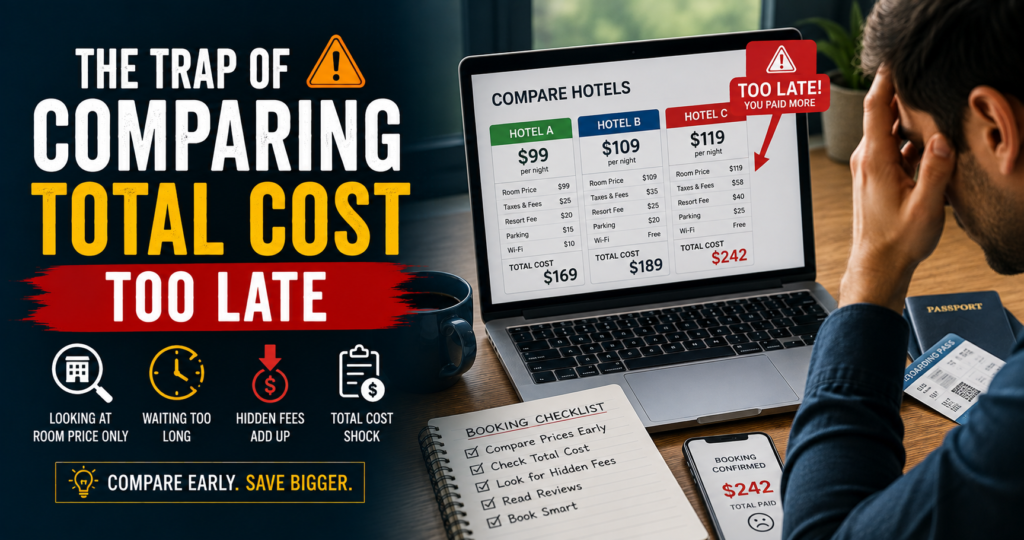
This is the mistake that costs people the most, and it has nothing to do with timing in the calendar sense. It’s about when in your own decision-making process you check the full cost. Plenty of people compare base nightly rates across a few hotels, pick the cheapest, and only discover the true total taxes, resort fees, parking, whatever else gets added at the final checkout screen.By then, you’ve mentally committed. Comparing total cost, not base rate, before you start narrowing down options avoids that trap entirely. It sometimes reorders the whole list; a hotel that looked most expensive at first glance can end up cheapest once every mandatory charge is actually included.
A Rough Framework, Not a Rule
If I had to boil this down: high-demand dates in popular cities get booked early, ideally as soon as your travel dates are locked in. Flexible, off-peak trips benefit from checking periodically and waiting for the price to soften. And regardless of timing, comparing total cost across at least a few booking channels before falling for the first appealing number matters more than hitting some specific day or hour that a blog post claims is magic.There’s no single correct answer to “when should I book,” because the honest answer is: it depends on the trip. Once I stopped looking for a universal rule and started matching my strategy to the specific situation, hotel booking stopped feeling like guesswork and started feeling like something I actually had some control over.

Mikhaila Olena is a lifestyle writer and content creator behind Living Smart Daily, dedicated to sharing practical ideas, thoughtful insights, and everyday inspiration. With a passion for simple living and meaningful choices, she crafts content that helps readers create a more balanced, organized, and fulfilling life.





One comment on “When to Book a Hotel: The Timing Question Nobody Answers Honestly”