




I used to think stress management meant lighting a candle and doing four square breaths before my next Zoom call. It doesn’t. Not really. That’s the version of stress management sold to people who have thirty spare minutes and a quiet room — which, if you’re reading this at 11pm with three tabs open and a kid finally asleep, is probably not you.
Stress isn’t going anywhere. Anyone promising to eliminate it is selling something. The goal isn’t a stress-free life — that doesn’t exist outside of very boring retirement brochures. The goal is figuring out how to carry stress without it crushing you, and that’s a completely different skill.
Why Most Stress Advice Falls Flat
Here’s the problem with a lot of stress management content out there: it assumes you have control over your schedule. Take a bubble bath. Go for a walk in nature. Journal for twenty minutes. Great advice, genuinely — if you’re not the one also managing a toddler’s meltdown, a boss who emails at 9pm, and a bank account that keeps you up at night.
Real stress management has to work inside a messy, overcommitted life. Not instead of it.
So let’s talk about what actually holds up.
Start With the Body, Not the Mind
This one surprised me. I spent years trying to think my way out of stress — journaling, reframing, positive self-talk. Helpful, sometimes. But stress lives in the body first. Your shoulders climb toward your ears. Your jaw tightens. Your breath gets shallow and stays there without you noticing.
Research from the American Psychological Association backs this up — chronic stress triggers a physical cascade, not just a mental one, affecting everything from digestion to immune function. So working with the body isn’t a nice-to-have. It’s often the fastest lever you have.
A few things that genuinely move the needle:
- Physical movement, even five minutes of it. You don’t need a 45-minute gym session. A brisk walk around the block resets your nervous system more than people give it credit for.
- Slow exhales. Not fancy breathwork — just making your exhale longer than your inhale. It tells your body the danger has passed, even when your inbox disagrees.
- Cold water on your wrists or face. Sounds strange. Works fast. It’s a cheap trick your vagus nerve actually responds to.
The Underrated Fix: Naming the Actual Problem
Most of us walk around with a vague fog of stress instead of a specific, nameable source. And vague stress is almost impossible to manage because you can’t target it.
I started asking myself one blunt question when I felt overwhelmed: what, specifically, is stressing me out right now? Not “everything.” Something. Usually it’s smaller than it feels — an unanswered email, a conversation I’ve been avoiding, a to-do list I never wrote down so it just loops in my head.
Once you name it, you can usually do one of three things: solve it, schedule it, or let it go. Most stress management fails because people skip this step and jump straight to relaxation techniques for a problem they haven’t actually identified.
Sleep Is Doing More Work Than You Think
I’ll be blunt — no amount of stress management technique will out-perform bad sleep. The National Institute of Mental Health has pointed out that sleep deprivation amplifies emotional reactivity and makes minor stressors feel disproportionately large. That tracks with anyone who’s snapped at a loved one over something trivial after a rough night.
If you’re serious about managing stress and you’re consistently getting under six hours, that’s the first domino. Fix that before you buy another meditation app subscription.
Boundaries Aren’t Selfish, They’re Structural
This might be the least “wellness content” thing I’ll say, but it’s the truest: a huge chunk of chronic stress comes from saying yes to things you don’t have capacity for. Overcommitment isn’t a personality flaw. It’s often just poor boundary-setting dressed up as being a team player, a good friend, a reliable parent.
Saying “I can’t take that on right now” is stress management. It doesn’t look like it in wellness articles, but it is. Protecting your time protects your nervous system.
Small Rituals Beat Big Overhauls
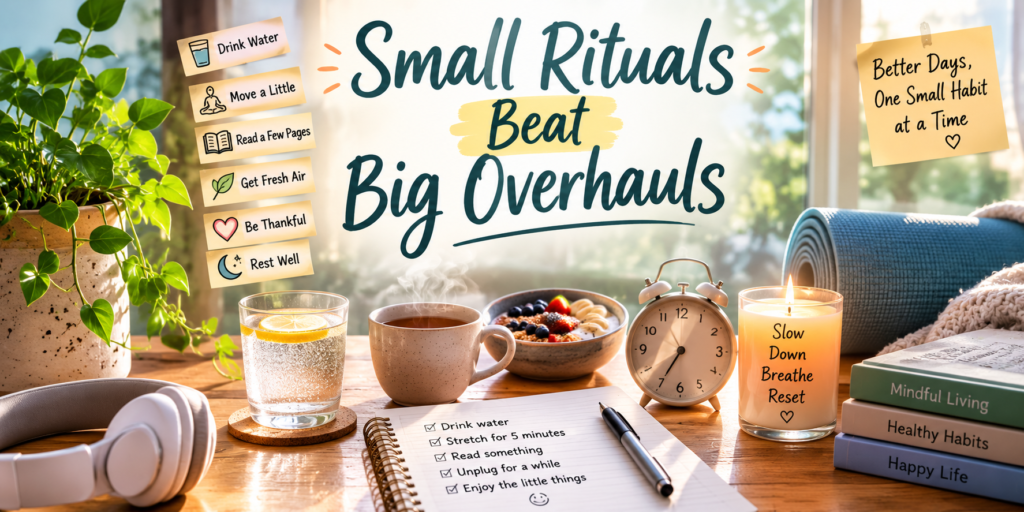
Nobody sustains a two-hour self-care routine. Life doesn’t allow it, and honestly, most people don’t want to. What sticks are small, repeatable rituals — the same ten-minute walk after lunch, a specific playlist for the commute home, a cup of tea before bed that signals “the day is done.”
The Mayo Clinic notes that consistent, even brief relaxation practices build resilience over time far more reliably than occasional intensive ones. Consistency beats intensity, every time.
When to Get More Support
Sometimes stress isn’t something you can walk off or breathe through. If it’s affecting your sleep for weeks on end, your relationships, your ability to function at work, or it’s tipping into anxiety or depression, that’s worth talking to a doctor or therapist about. Stress management techniques are genuinely useful, but they’re not a substitute for professional support when things have gone past what self-help can touch.
There’s no medal for white-knuckling through it alone.
The Honest Bottom Line
Stress management isn’t a single practice you adopt once and check off a list. It’s closer to a set of small, repeated choices — moving your body, naming the actual problem, protecting your sleep, saying no more often, building tiny rituals that don’t require a spare hour you don’t have. None of it removes stress from your life. It just changes how much of it you’re carrying, and how heavy it feels when you do.

Mikhaila Olena is a lifestyle writer and content creator behind Living Smart Daily, dedicated to sharing practical ideas, thoughtful insights, and everyday inspiration. With a passion for simple living and meaningful choices, she crafts content that helps readers create a more balanced, organized, and fulfilling life.





One comment on “Stress Management That Actually Works When Life Won’t Slow Down”