









I moved to a new city a few years back and did what everyone does typed “doctor near me” into my phone, stared at a list of a dozen names I knew nothing about, and picked one based on a star rating and a headshot that looked trustworthy. Six months later I switched, because the fit was wrong in a handful of small ways that never showed up in that initial search: rushed appointments, a scheduling system that made same-week visits nearly impossible, a communication style that didn’t match what I needed.
That experience is what changed how I search now. A list of nearby names is the easy part. Turning that list into an actual decision is where most people, myself included at the time, don’t know what to look for.
Confirm the Network Before You Fall in Love With the Reviews
This is the step people skip because it’s tedious, and it’s the one that causes the most frustration later. A doctor can have excellent reviews and still be entirely out of network for your specific insurance plan, which turns an appointment you assumed would cost a standard copay into a bill running into hundreds of dollars.
Before evaluating anything else on the list, I now call the insurance company’s member line or check the plan’s own provider directory directly, rather than trusting a third-party site’s “accepts your insurance” badge. Those badges go stale. Practices change which plans they accept more often than these directories get updated, and a quick call confirms it’s actually current before you build any attachment to a specific name.
Board Certification Is Public Information Check It
Every licensed physician in the US is required to meet state licensing standards, and board certification in a specialty is a separate, additional credential that isn’t automatically implied by having a medical degree. It’s public record, searchable through your state’s medical board website or through the relevant specialty board’s own verification tool, and it takes about two minutes to check.
This isn’t about being suspicious of every provider on a list. It’s a basic diligence step, the same way you’d check a contractor’s license before hiring them for home renovation work quick, free, and it rules out the rare case where something doesn’t check out.
Read Reviews for Communication Style, Not Just Outcomes
Star ratings compress a lot of different experiences into one number, and for choosing a doctor specifically, the detail that matters most rarely shows up in the rating itself. It shows up in the text. Does this reviewer describe a rushed five-minute visit, or someone who actually explained what was happening and answered questions? Did they mention long waits even with an appointment, or a practice that generally runs on time?
Different people want different things here some prioritize efficiency, some want more conversation and explanation — so the goal isn’t finding universally glowing reviews. It’s finding a pattern that matches what you’re actually looking for in how a visit unfolds.
Ask About New Patient Availability Honestly
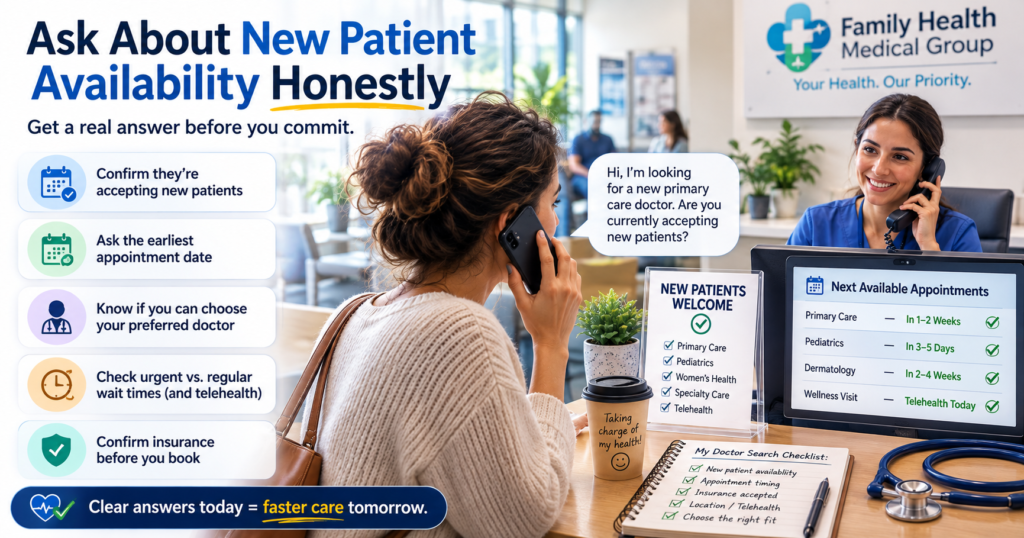
A practice can have a wonderful doctor and still be functionally inaccessible if they’re not accepting new patients or if the next available appointment is three months out. This is worth asking directly, by phone, before you invest time evaluating anything else about the practice it’s the fastest possible disqualifier and saves you from getting attached to an option that isn’t actually available.
If a practice is currently full, it’s also worth asking whether they maintain a waitlist for cancellations, since that sometimes gets you in considerably faster than the quoted next-available date.
Consider What Telehealth Access Actually Looks Like
Since virtual visits became a mainstream option, the specifics vary a lot between practices some offer genuine telehealth follow-ups for straightforward matters, others technically offer it but rarely have availability, and some don’t offer it at all. If flexibility matters to you, it’s worth asking directly what a typical telehealth option looks like at that specific practice, rather than assuming every provider handles it the same way.
What This Looks Like in Practice
Confirm insurance network status directly, rather than trusting a badge on a listing site. Check board certification through a public, verifiable source. Read reviews for communication style and how visits actually unfold, not just the star average. Ask about new patient availability honestly before evaluating anything else. And ask what telehealth access genuinely looks like if that flexibility matters for your situation.
None of this replaces the judgment you’ll form once you’re actually sitting in the room with someone. But it turns a list of a dozen unfamiliar names into a shortlist worth the actual appointment instead of a guess based on a star rating and a headshot, the way mine was the first time around.

Mikhaila Olena is a lifestyle writer and content creator behind Living Smart Daily, dedicated to sharing practical ideas, thoughtful insights, and everyday inspiration. With a passion for simple living and meaningful choices, she crafts content that helps readers create a more balanced, organized, and fulfilling life.




One comment on “Searching “Doctor Near Me”? Here’s How to Actually Choose One”