



A recall headline rarely tells you what you actually need to know: is the box sitting in your own pantry one of the affected ones? Brand names get recalled all the time, but usually only a specific batch, lot, or date range is unsafe. Here’s how to find out in a few minutes, using the same government sources that news outlets pull from.
Step 1: Find the Right Government Source for the Product Type
Not every recall comes from the same agency, so knowing where to look saves time.
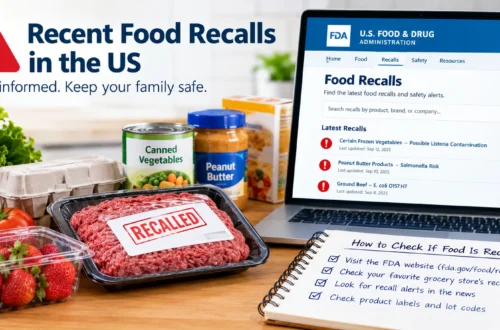
- FDA (Food and Drug Administration) handles most packaged foods, beverages, coffee, baby formula, and dietary supplements.
- USDA FSIS (Food Safety and Inspection Service) handles meat, poultry, and egg products specifically.
- Recalls.gov is a combined portal that pulls from FDA, USDA, CPSC, and NHTSA in one place, useful when you’re not sure which agency covers your product.
If you already know the brand, searching “[brand name] recall FDA” or “[brand name] recall USDA” usually gets you straight to the notice faster than browsing the agency’s own site.
Step 2: Locate the Product Codes on Your Package
This is the part most people skip, and it’s the part that actually matters. A recall notice almost never applies to an entire product line forever; it applies to a specific:
- Lot code or batch number (often a string of numbers near the barcode or on the bottom of the package)
- Best-by, sell-by, or use-by date
- UPC (barcode number), usually 12 digits
- USDA establishment number, for meat and poultry, printed inside a small circle or shield symbol
Grab your product and find these before you search. Comparing your exact codes against the recall notice is the only way to know for certain whether your specific package is affected.
Step 3: Search and Compare
Once you have your codes, go to the FDA’s recall listing, the USDA FSIS recalls page, or a combined checker like recalls.gov, and search by product name or company. When you find a matching recall, the notice will usually spell out one of these outcomes:
- Match—your exact lot code or date is named in the recall; stop using it
- Possible match—the brand or product is recalled, but the notice doesn’t specify enough detail to confirm your exact package; treat it with caution and check the manufacturer’s site
- No match—your codes aren’t listed; that doesn’t guarantee future safety, but it means this particular recall doesn’t apply to your package
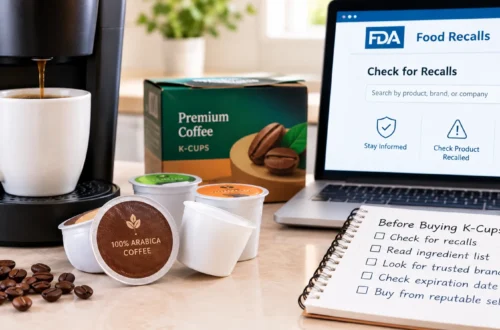
A real example: when New Mexico Piñon Coffee recalled its Dark Piñon Single Serve Cups, the notice named one specific lot code (251749) and one best-by date (May 8, 2026). A box from a different lot wasn’t part of that recall at all, even though it was the same product line from the same company.
Step 4: Know What to Do With a Recalled Product
Once you’ve confirmed a match, the recall notice itself will tell you the recommended action, but it’s usually one of these:
- Stop using it immediately. Don’t cook it, brew it, or serve it while you sort out the details.
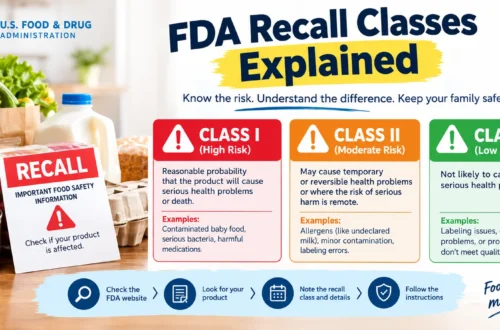
- Check the reason for the recall. A labeling error or minor packaging defect is handled differently than a pathogen contamination.
- Return or discard it, following whatever the specific notice instructs. Most brands will refund you either way.
- Contact the manufacturer if you have questions, using the phone number or email listed in the official notice, not a number you found through a random search result.
- Watch for symptoms if you’ve already consumed the product and the recall involves a pathogen or allergen. Contact a healthcare provider if anything feels off, and consider reporting it to the FDA through MedWatch.
Step 5: Set Up Ongoing Alerts (So You’re Not Searching Reactively)
Checking manually after every scary headline gets old fast. A better approach:
- Sign up for FDA recall email alerts directly on the FDA’s site
- Use your grocery store’s loyalty card consistently; several major chains will notify you automatically if something you bought gets recalled
- Follow recalls.gov’s alert system if you want a single feed covering food, products, and vehicles together
Why This Matters More Than It Used To
Food recalls haven’t slowed down. Early 2026 alone has already included recalls tied to undeclared allergens, packaging contamination, and pathogen risks across multiple product categories. Most of these, like the Piñon coffee situation, turn out to be low-risk, but a handful involve real health consequences. The five-minute habit of checking lot codes before assuming “my brand got recalled; therefore, my product is unsafe” (or the opposite: assuming it’s fine because you didn’t hear about it) is the difference between an informed decision and a guess.

Mikhaila Olena is a lifestyle writer and content creator behind Living Smart Daily, dedicated to sharing practical ideas, thoughtful insights, and everyday inspiration. With a passion for simple living and meaningful choices, she crafts content that helps readers create a more balanced, organized, and fulfilling life.


One comment on “How to Check if Your Food Product Has Been Recalled (Step-by-Step Guide)”